Why Medical Laundry Standards Matter More Than Ever
Clean, safe textiles are a basic part of patient care in every medical setting, from primary care offices to dental practices and therapy clinics. When linens, gowns, and scrubs are properly processed, they help break the chain of infection and reduce the chance that germs move from one person to another. When they are not handled correctly, they can quietly become a source of cross-contamination in your office.
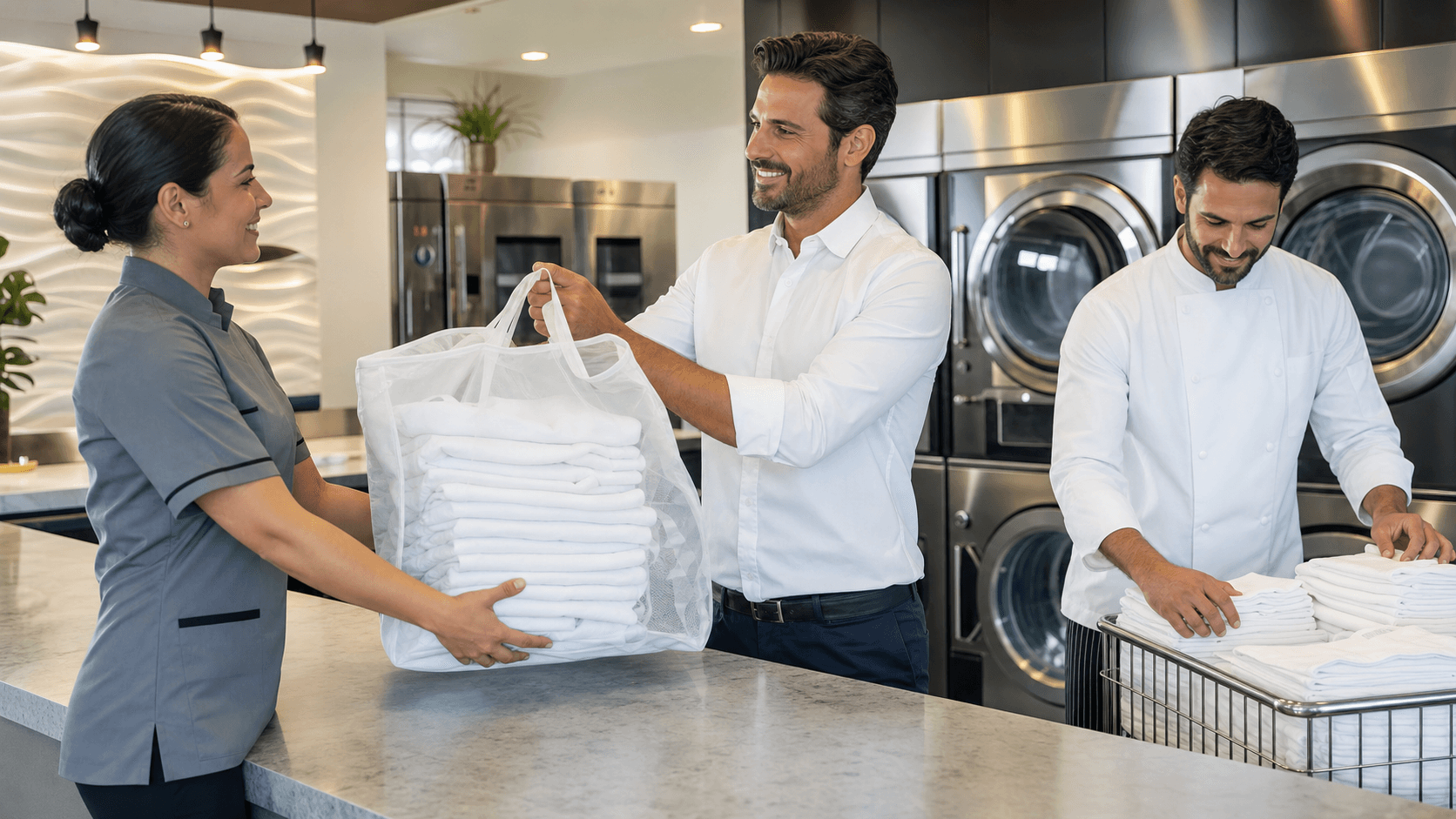
Medical-grade laundry is very different from regular household laundry. Medical textiles are often exposed to bodily fluids, respiratory droplets, and other potentially infectious materials, so they need specific handling, wash temperatures, and chemistry. Sorting, bagging, washing, drying, and storage all need to follow consistent procedures so staff and patients stay protected. At Sparkle Laundry Lounge, we provide a commercial laundry service in Burbank for medical and healthcare offices across Burbank and the Greater LA area, and we see every day how strong laundry practices support safer care.
Understanding Healthcare-Grade Laundry Requirements
Healthcare laundry expectations come from a mix of regulatory guidelines and industry best practices. In general, medical textiles should be washed at appropriate temperatures that support disinfection, with detergents and sanitizing agents designed for high soil levels and clinical settings. Clean and soiled items must stay clearly separated at every stage, from collection to transport to storage, so that anything freshly washed is never exposed again to contamination.
In a medical office, it helps to think of your textiles in categories. Common categories include:
- Patient-use items, such as gowns, sheets, pillowcases, blankets, and exam table covers
- Staff items, such as scrubs, lab coats, and reusable masks
- Treatment and cleaning items, such as hand towels, bath towels, washcloths, and cleaning cloths
Each group has different soil levels and different points of exposure. For example, exam table covers and patient gowns often have direct contact with skin, while cleaning cloths touch high-contact surfaces. Having written protocols for each category of textile keeps everyone on the same page.
Written laundry procedures are only helpful if your team understands them and can follow them easily. Training should cover how to bag and label soiled items, where to put them, how often to send them for processing, and what to do when an item is visibly contaminated with blood or other body fluids. Regular refreshers, especially when new staff join, help keep your protocols consistent, even on very busy days.
Safe Handling and Storage of Soiled Linens
Good medical laundry starts long before anything goes into a washer. Soiled linens should go directly into designated hampers or leak-resistant bags in each exam room or treatment area. These containers should not be overfilled, since overstuffed bags are more likely to tear or spill. Staff should avoid shaking out linens in patient areas, because that can release particles and droplets into the air.
Clear labeling is essential. Items that are simply used, such as a towel from a routine exam, can be processed as regular soiled laundry. Items that are visibly saturated with blood or other potentially infectious materials should be placed in clearly marked bags and handled according to your practice's exposure control plan. In some cases, depending on your policies and guidelines, it may be safer to treat heavily contaminated items as biohazard waste instead of laundry.
On-site, soiled linen storage should keep risk as low as possible. Hampers and bags should close securely and remain away from clean supply areas, break rooms, and waiting spaces. Transport paths to your laundry room or pickup point should be planned so that full bags do not move through crowded patient zones more than necessary. The goal is simple: once textiles are soiled, they should be contained, labeled, and moved along without unnecessary handling.
Washing, Drying, and Finishing for Medical Textiles
A healthcare-ready wash process starts with good sorting. Separate items by fabric type, color, and soil level so they wash evenly and do not damage each other. Heavily soiled loads usually need stronger wash formulas and longer cycles than lightly used items, like front-office lab coats. Selecting water temperatures that support disinfection, combined with appropriate detergents and sanitizing agents, is key to hygienic results. For patients or staff with sensitive skin, an extra rinse cycle can help remove residual chemistry.
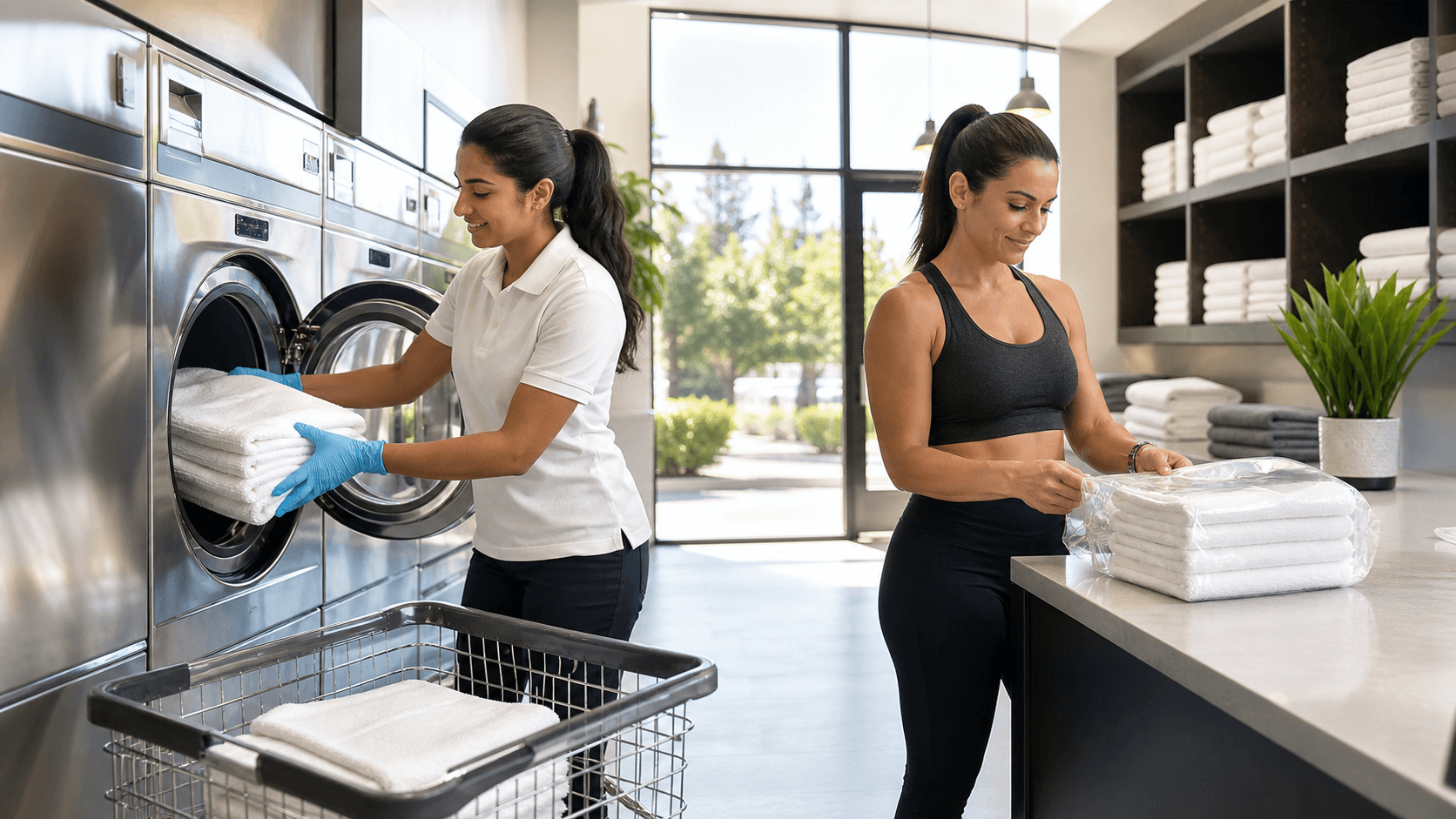
Drying is just as important as washing. High-heat dryer settings, used for the correct amount of time, help with disinfection and ensure that no dampness remains inside folds or seams. Damp textiles can develop unpleasant odors or mildew if they sit too long in a cart or on a shelf. Removing items promptly from the dryer reduces wrinkling and keeps fresh laundry from picking up dust or contaminants in the air.
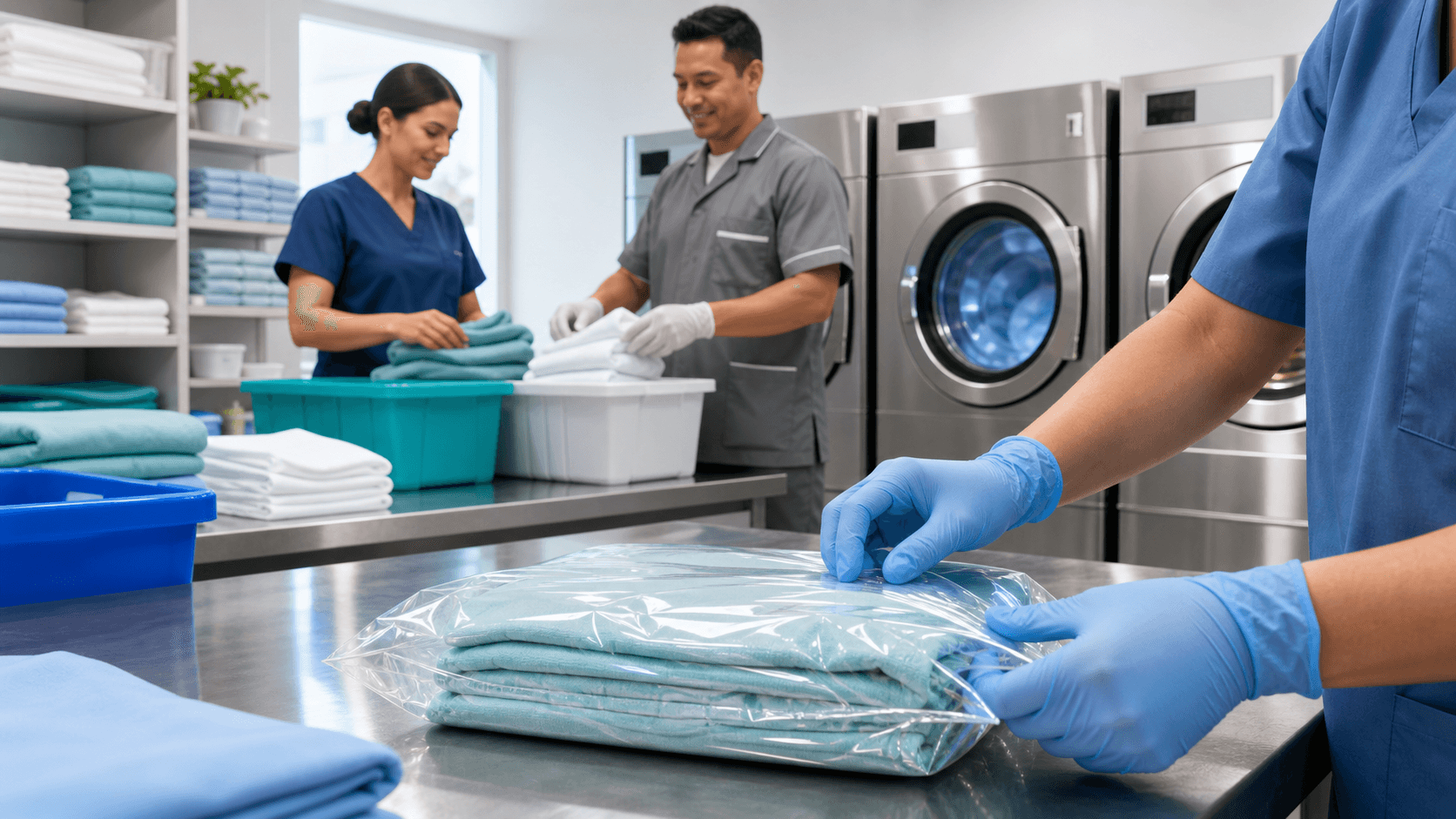
Finishing steps close the loop. Folding linens in a clean area, away from soiled items, keeps them ready for use. Many medical offices prefer bagged or wrapped bundles, especially for gowns, sheets, and towels that will be used directly by patients. Sealed or protected packaging helps prevent recontamination while items are stored or moved between rooms.
Setting up a Reliable Laundry Workflow in Your Practice
To decide how much laundry capacity your office needs, start with an average day. How many patients do you see, and which services do they receive? For each type of visit, estimate how many gowns, towels, and table covers you use. Then build in a buffer for schedule changes and same-day add-ons. This helps you determine how many sets of linens you should keep on hand so you can always rotate clean stock into exam rooms without waiting on a load to finish.
A clear workflow prevents last-minute shortages. Many practices find it helpful to:
- Assign a specific staff member each shift to monitor linen levels
- Set fixed times during the day to collect soiled items from all rooms
- Standardize pickup or drop-off windows for outside laundry providers
- Create a simple checklist for restocking each exam room
Once you understand your volume, it is easier to compare in-house laundry to partnering with a commercial laundry service in Burbank. In-house laundry gives you direct control, but it also requires space, equipment, maintenance, supplies, and dedicated staff time. Partnering with a professional service can free your team to focus more on patients, while you receive consistent processing that is built around healthcare needs and infection-control priorities.
Choosing the Right Commercial Laundry Partner
If you decide to work with an outside provider, it helps to know what to look for. A good partner should be comfortable handling medical and healthcare accounts and have machines that can handle larger, heavier loads. They should be able to explain their sanitation procedures, including how they keep clean and soiled items separate and what chemistry and temperatures they use for different fabric types. Quality checks, such as visual inspections for stains or damage, help make sure what you receive is ready for patient care.
Before committing to a commercial laundry service in Burbank, consider asking questions like:
- How do you separate medical textiles from other customer items?
- What types of detergents and sanitizing products do you use?
- Can you support sensitive-skin requests or fragrance preferences?
- How do you handle special instructions, such as heavily soiled bags or rush orders?
At Sparkle Laundry Lounge, we offer wash and fold service and pickup and delivery options for medical offices in Burbank and surrounding LA communities. Our goal is to make it easier for practices to keep a steady supply of clean, comfortable linens and garments, so staff can devote their attention to patient care and daily operations.
Elevate Patient Confidence with Cleaner Linens Today
Consistent, professional laundry practices do more than keep your office looking neat. Fresh, hygienic linens tell patients that you respect their health and comfort from the moment they sit on the exam table or pull on a gown. For your staff, knowing there is always a clean set of scrubs or towels ready reduces stress and supports a healthier workplace.
Regularly reviewing your laundry procedures, from collection to storage, can reveal small gaps that are easy to improve. Whether you maintain an efficient in-house system or decide that partnering with a dedicated commercial laundry provider is a better fit, strengthening your approach to medical textiles is a practical step toward safer, more confident patient care in your office.
Streamline Your Laundry Operations With Reliable Local Experts
If you are ready to free up time and focus on your core business, our commercial laundry service in Burbank is built around your schedule and volume needs. At Sparkle Laundry Lounge, we work with you to customize pickup, turnaround times, and folding preferences so your team always has what it needs. Tell us about your operation and we will create a plan that fits your workflow, then keep you updated every step of the way. Have questions or need a quote right away? Just contact us and we will respond promptly.